
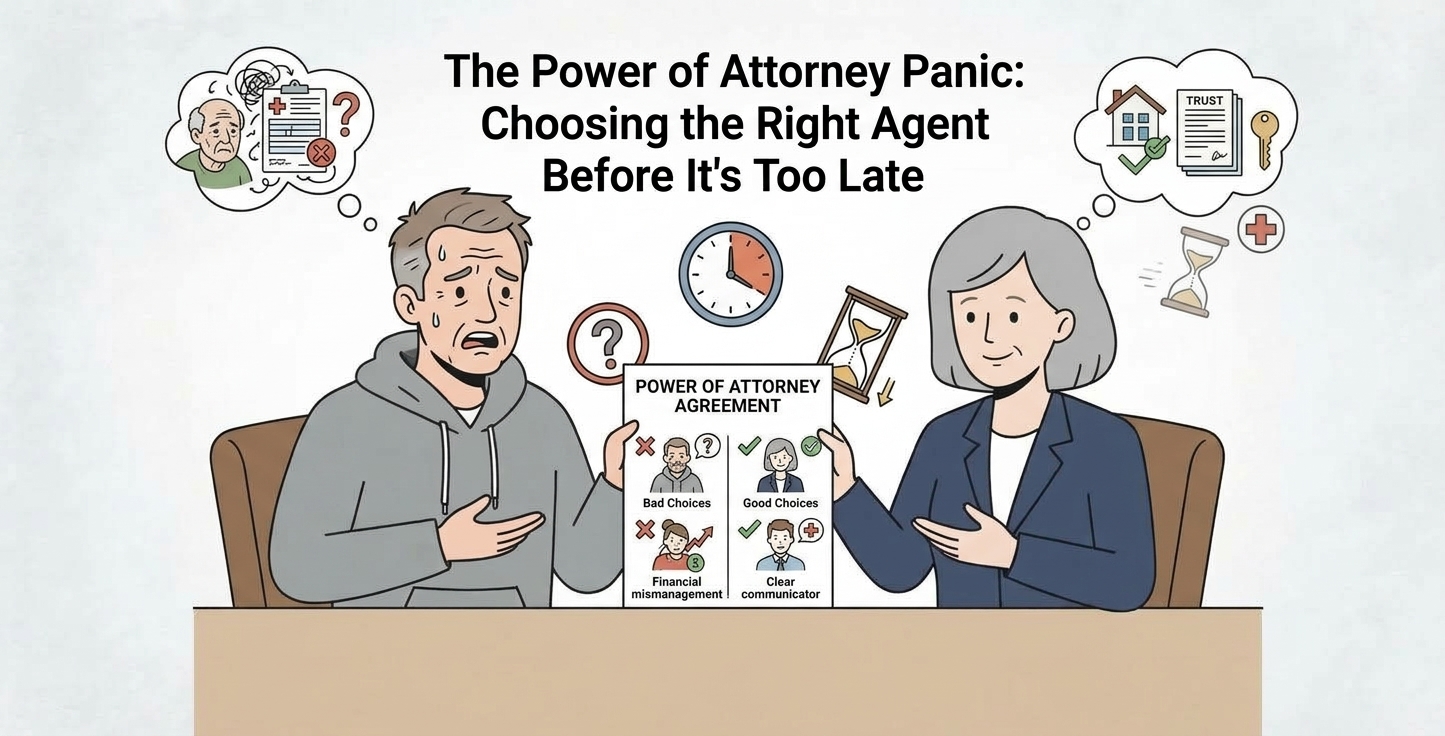
We like to think we’ll always be in the driver’s seat of our own lives. But life can throw unexpected medical emergencies or cognitive shifts our way in the blink of an eye. When those moments happen, who steps in to pay your bills, talk to your doctors, or manage your property?
If you haven't designated a durable power of attorney (DPOA), the answer might be a court-appointed stranger. Selecting an agent is one of the most critical decisions in your estate planning legal documents, yet many people panic and pick a family member out of obligation rather than capability.
Let’s unpack how to choose the right person—and why getting their signature notarized before a crisis hits is everything.
What is a Power of Attorney (and Why "Durable" Matters)
A power of attorney is a legal document where you (the "principal") grant someone else (your "agent" or "attorney-in-fact") the authority to act on your behalf.
A standard power of attorney dies the moment you become incapacitated. A durable power of attorney, however, stays active precisely when you need it most—if you become physically or mentally unable to make decisions for yourself.
Generally, you'll want to split this authority into two categories:
-
Financial POA: Handles banking, pays mortgages, files taxes, and manages investments.
-
Medical (Healthcare) POA: Communicates with doctors and makes critical healthcare decisions if you can't speak for yourself.
The 4 Traps People Fall Into When Choosing an Agent
When panic sets in, it’s easy to make emotional choices. Avoid these common pitfalls when naming your agent:
-
Picking Solely Based on Birth Order: Just because someone is your oldest child doesn't mean they are financially organized or emotionally equipped to handle a crisis.
-
Failing to Ask First: Never name someone as your agent without having a frank conversation with them first. The role carries immense fiduciary and emotional weight; they need to know what they are signing up for.
-
Ignoring Geographic Proximity: While banking can often be done online, dealing with local medical facilities, physical property, and government offices is much easier if your agent lives nearby.
-
Choosing Someone Too Overwhelmed: If your chosen agent is already balancing a high-stress job, young kids, and aging parents of their own, adding your legal and financial portfolio might cause them to break under pressure.
Why Timing and Proper Notarization Are Non-Negotiable
You cannot sign a power of attorney after you lose the mental capacity to understand it. Waiting until a medical emergency strikes is too late. The document must be executed while you are completely of sound mind.
Furthermore, financial institutions and hospitals are rightfully strict. If a DPOA document has a sloppy witness line or a missing stamp, it can be rejected outright. Having a professional notary oversee the execution—and ensuring your state's specific rules for witness requirements are met—protects your document from being tied up in red tape when time is of the essence.
Steps to Take Today
-
Have the conversation: Talk openly with your spouse, adult children, or trusted friend about your expectations.
-
Name a backup: Always choose a successor agent in case your primary choice is unable or unwilling to serve when the time comes.
-
Execute and notarize: Finalize your paperwork with an experienced notary who understands the gravity of estate planning legal documents and can ensure your signatures stand up to scrutiny.
The Bottom Line
Choosing a durable power of attorney isn't about picking a favorite child or friend—it's about choosing the most capable crisis manager for your life. By planning ahead, you save your loved ones from a scramble through the courts and ensure your future is governed by someone you deeply trust.
Disclaimer: I am a blog writer and notary professional, not an attorney. This content is for informational purposes only and does not constitute legal advice. For specific guidance on drafting or executing a power of attorney, please consult with a licensed estate planning attorney in your state.
Comments